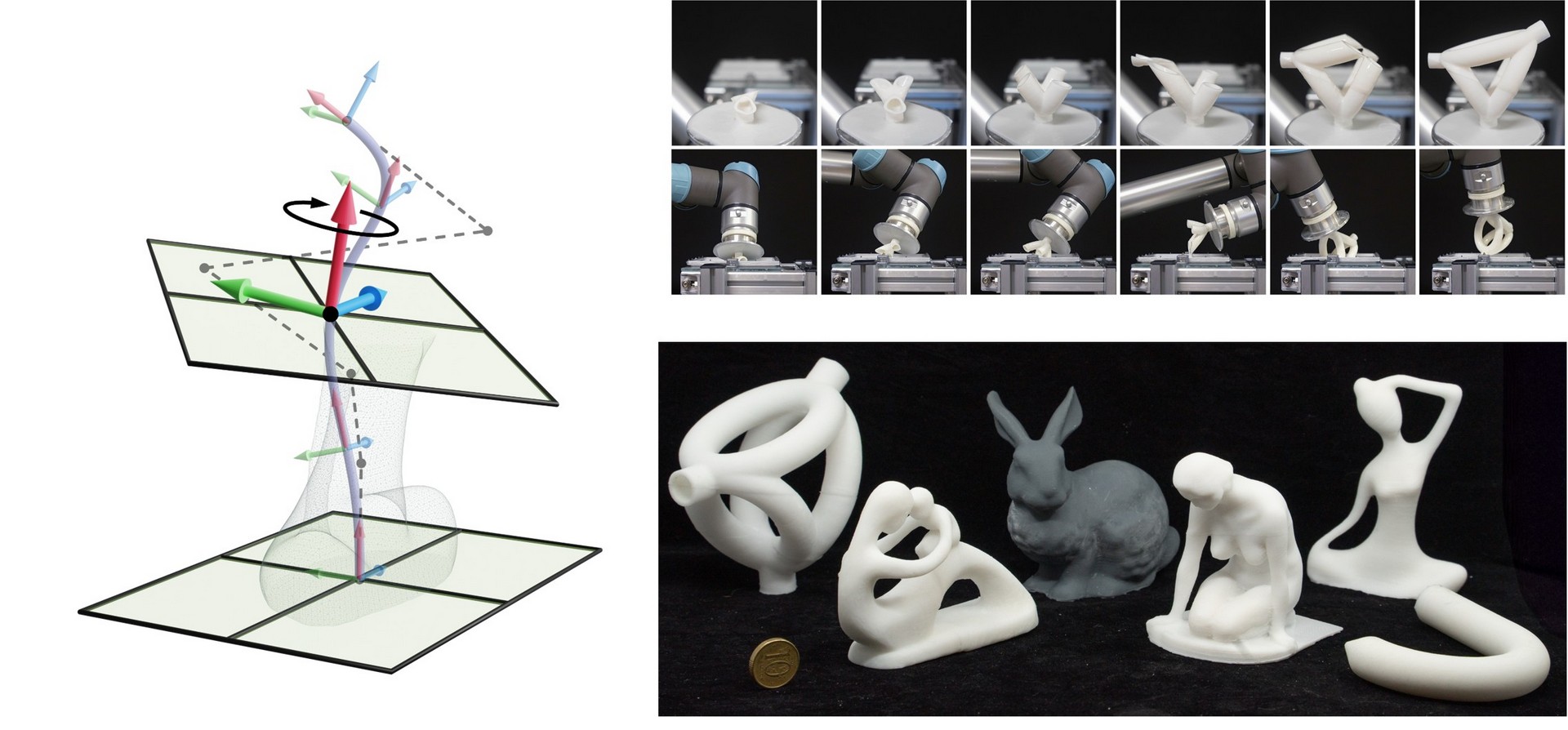
Thin-Film DLP 3D Printing of Multi-Material Parts with Closed-Cell Internal Voids
Binzhi Sun, Nicholas S. Diaco, Xiangjia Chen, Chengkai Dai, A. John Hart, Charlie C.L. Wang, Guoxin Fang*, and Yeung Yam*
NPJ Advanced Manufacturing, 3, 15 (2026).
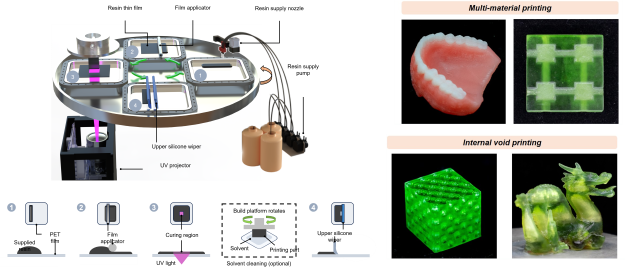
TL;DR Casting and curing thin resin films replaces the vat, enabling multi-material DLP printing of enclosed hollow structures with minimal trapped resin.
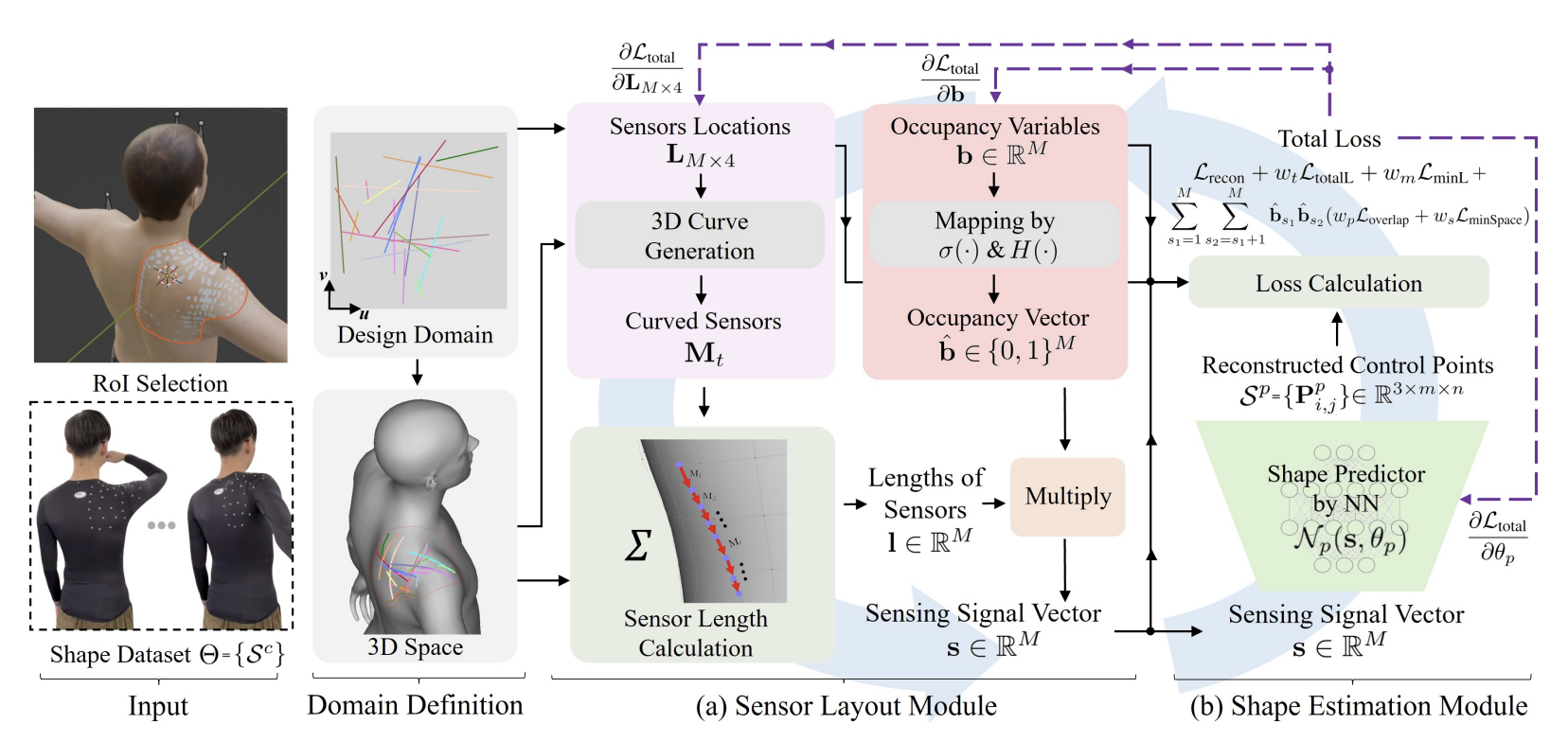
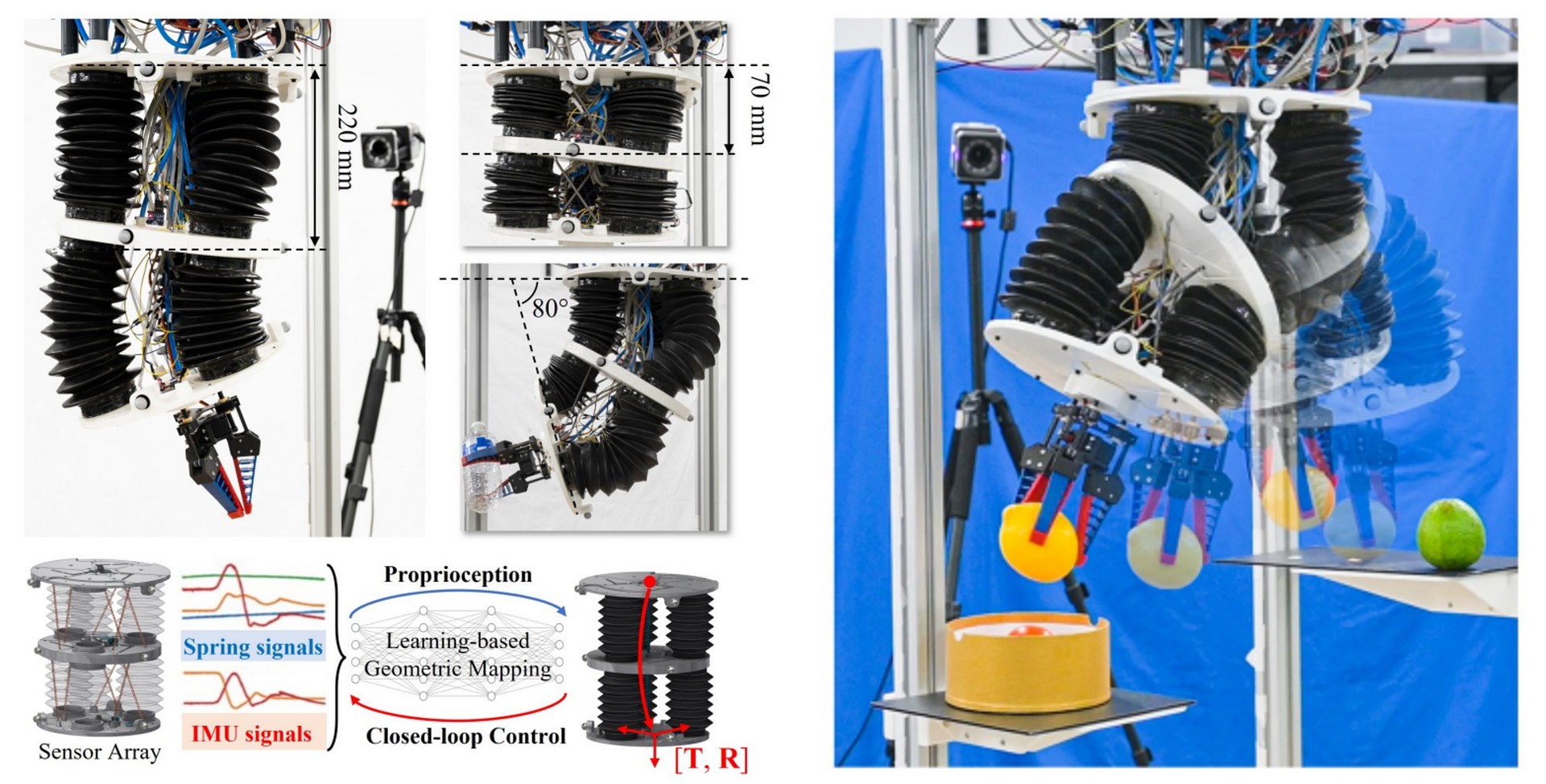
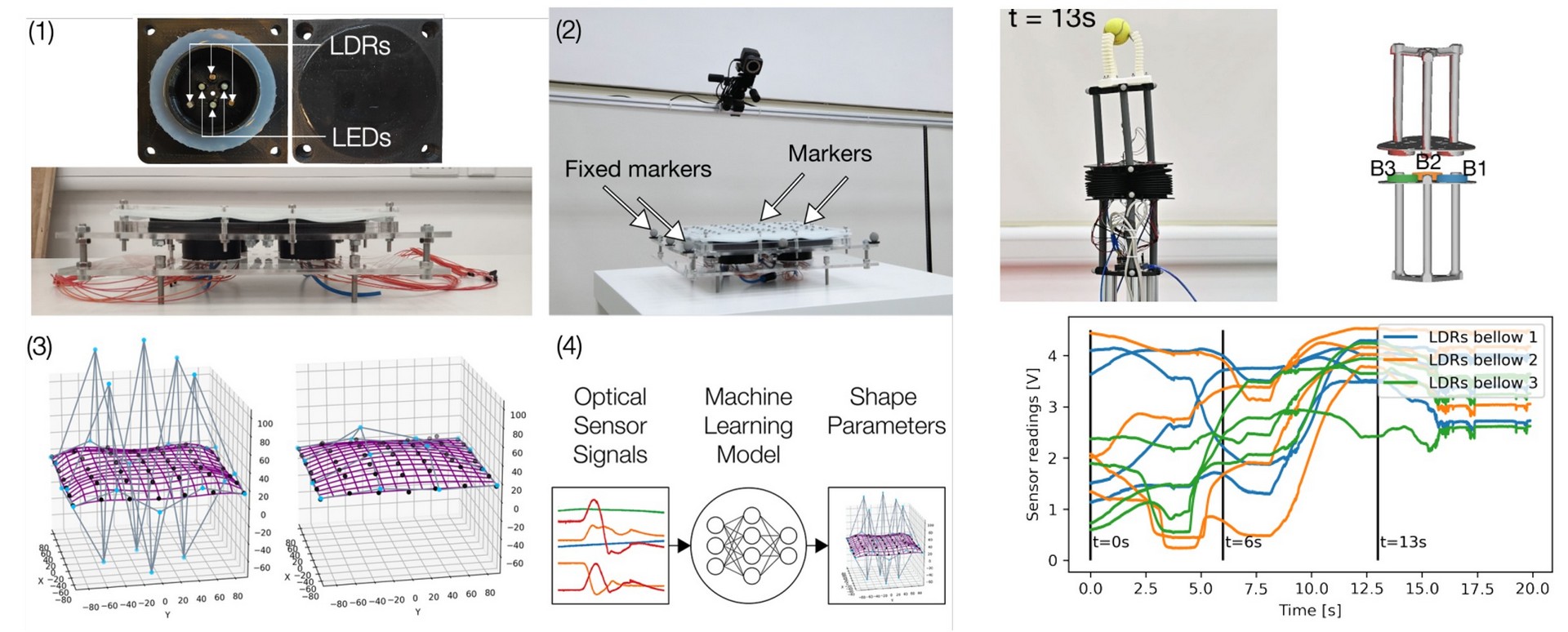
Model-Free Co-Optimization of Manufacturable Sensor Layouts and Deformation Proprioception
Yingjun Tian, Guoxin Fang, Aoran Lyu, Xilong Wang, Zikang Shi, Yuhu Guo, Weiming Wang and Charlie C.L. Wang*
IEEE Transactions on Robotics, vol.42, pp.1662-1679, March 2026.
TL;DR Jointly optimizing sensor layouts and shape prediction produces sparse, manufacturable sensing systems that reconstruct deformation without requiring a physical simulation model.
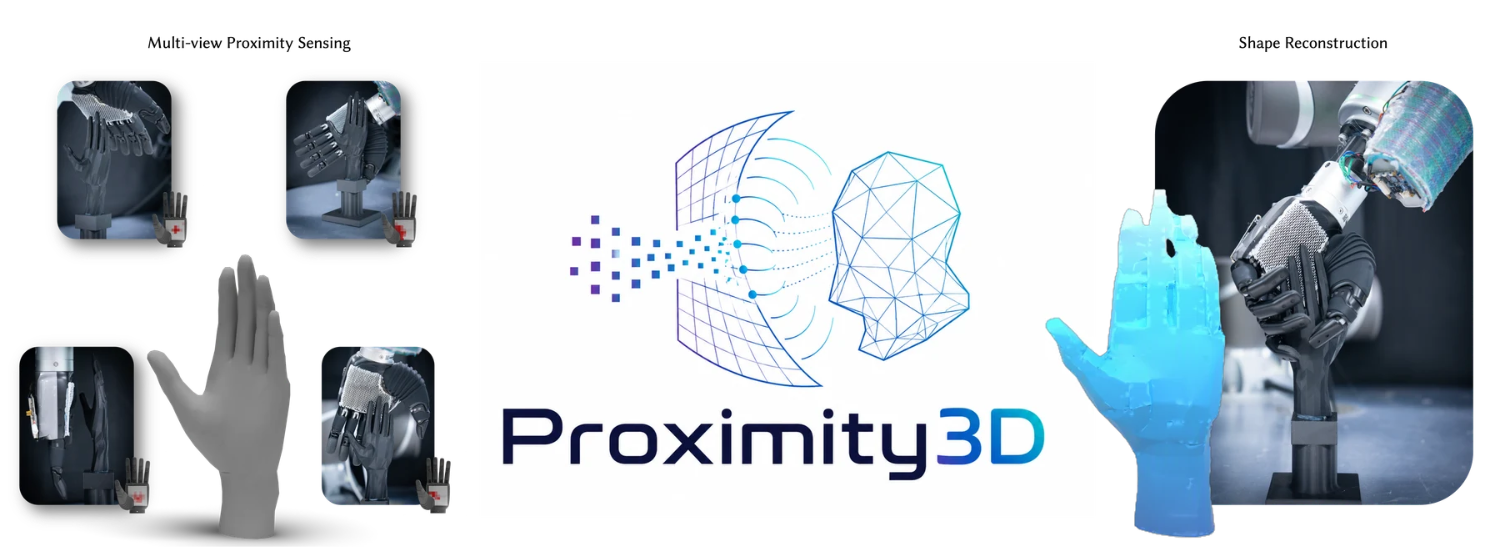
Proximity3D: Shape from Capacitive Proximity on Sensing Manifold
Hao Chen, Chenming Wu, Chun Ping Lam, Xiangjia Chen, Guoxin Fang, Charlie C.L. Wang, Yeung Yam, Juncong Lin, Chengkai Dai*
ACM SIGGRAPH Asia 2026, December, 2026, Malaysia.
TL;DR A curved capacitive textile senses nearby objects; a multi-view reconstruction network combines its proximity signals to recover their 3D shapes.
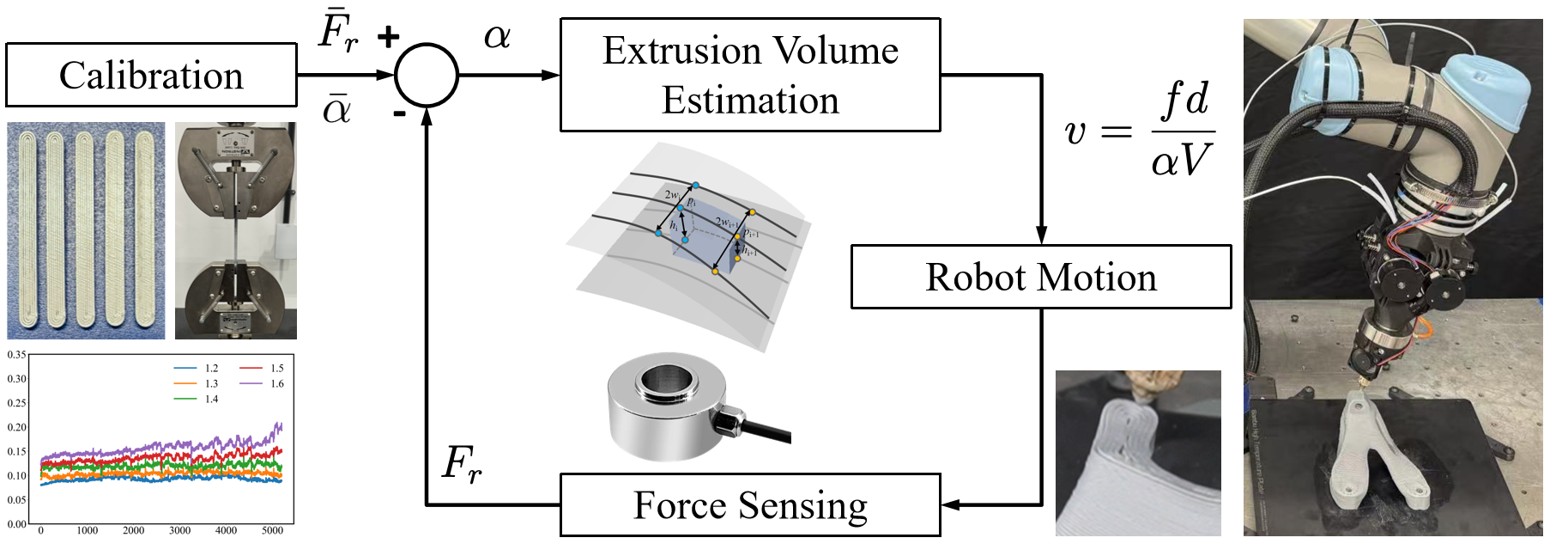
Force-based adaptive deposition in multi-axis additive manufacturing: Low porosity for enhanced strength
Yuming Huang, Renbo Su, Kun Qian, Tianyu Zhang, Yongxue Chen, Tao Liu, Guoxin Fang, Weiming Wang, and Charlie C.L. Wang
Robotics and Computer-Integrated Manufacturing, vol.98, 103123, 2026.
TL;DR Real-time force feedback adjusts printhead speed during curved-layer deposition, compensating for uneven material delivery to reduce porosity and improve part strength.
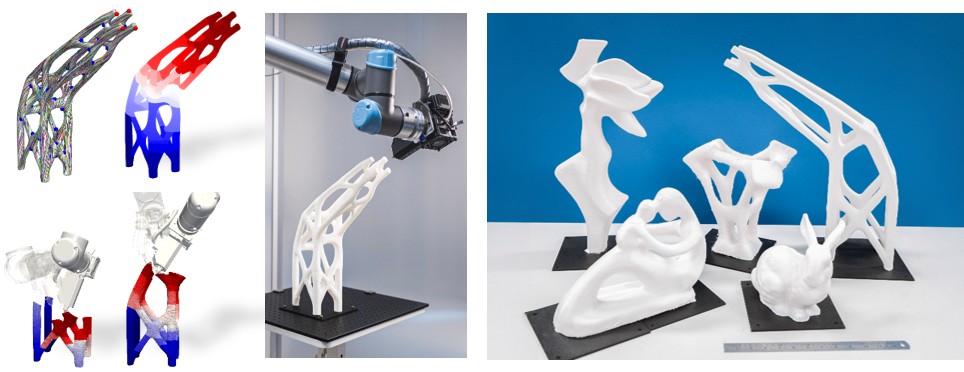
ACM Transactions on Graphics (Presented at SIG Asia 2025), no.6, December 2025. (Back Cover - TOG vol. 44 🏆)
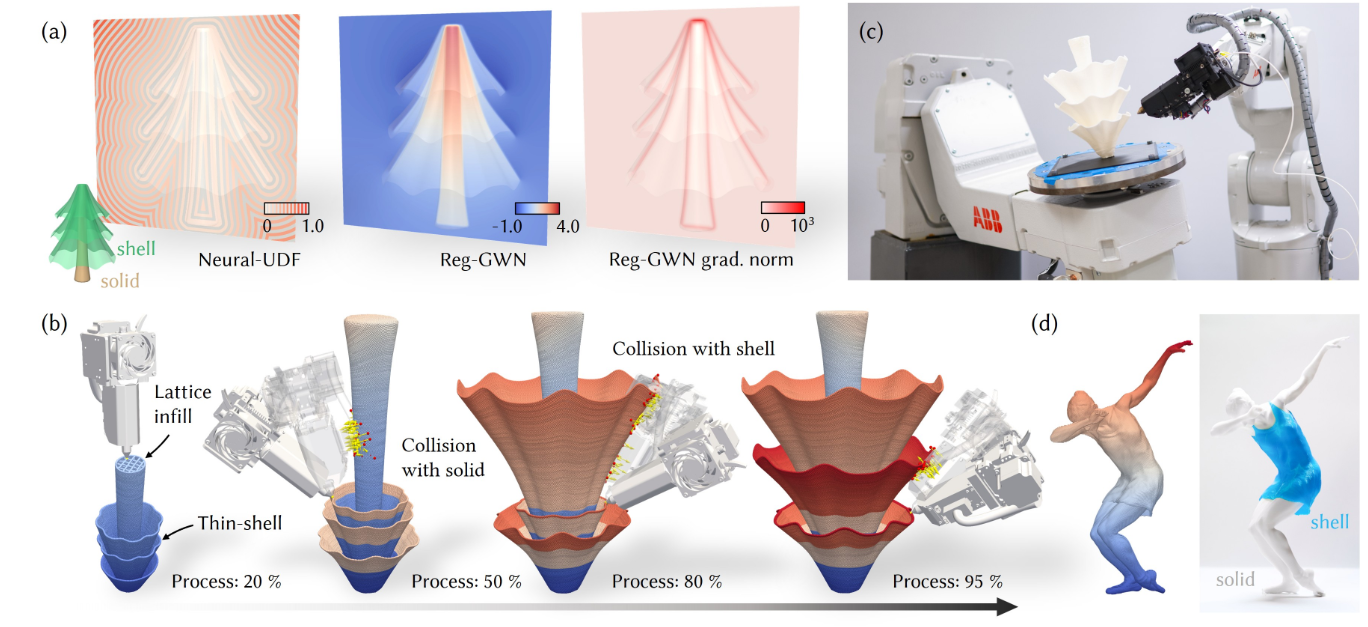
TL;DR Implicit neural fields combine toolpath generation and collision-aware robot motion in one framework, making large-scale multi-axis printing plans faster to compute.
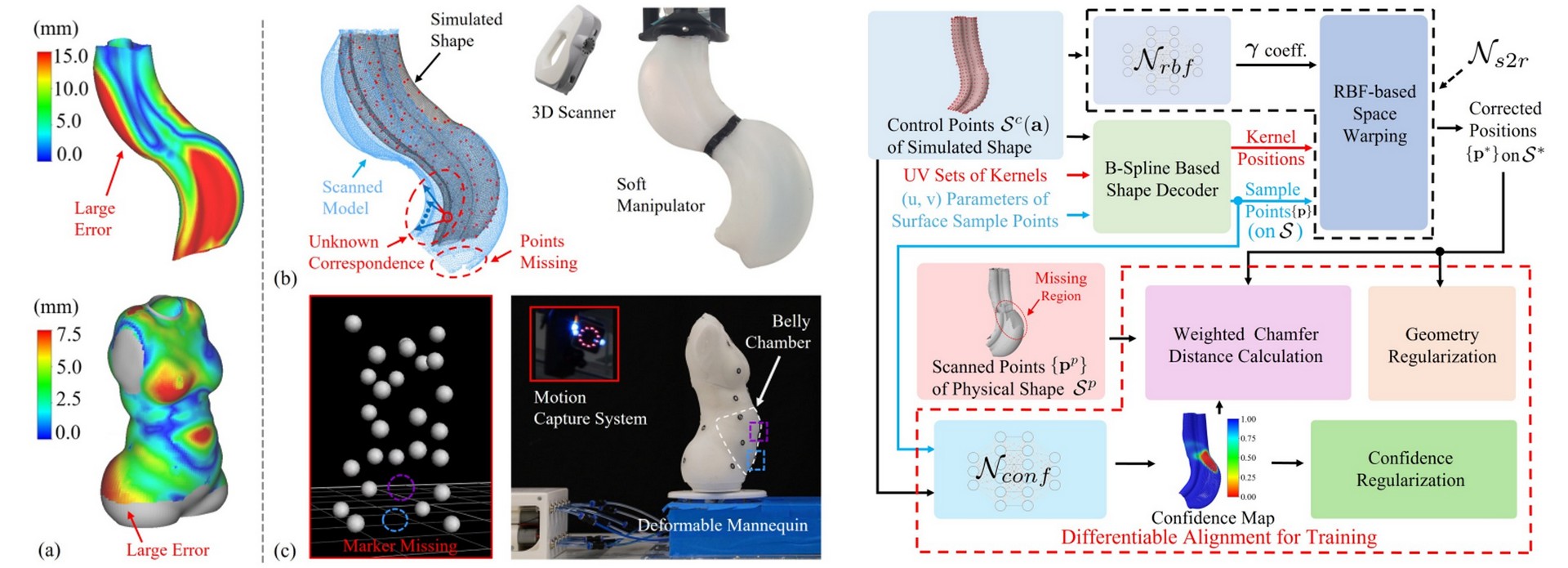
Correspondence-Free, Function-Based Sim-to-Real Learning for Deformable Surface Control
Yingjun Tian, Guoxin Fang, Renbo Su, Aoran Lyu, Neelotpal Dutta, Simeon Gill, Andrew Weightman, and Charlie CL Wang*
IEEE Transactions on Robotics, 2025 (extension of RSS 2024).
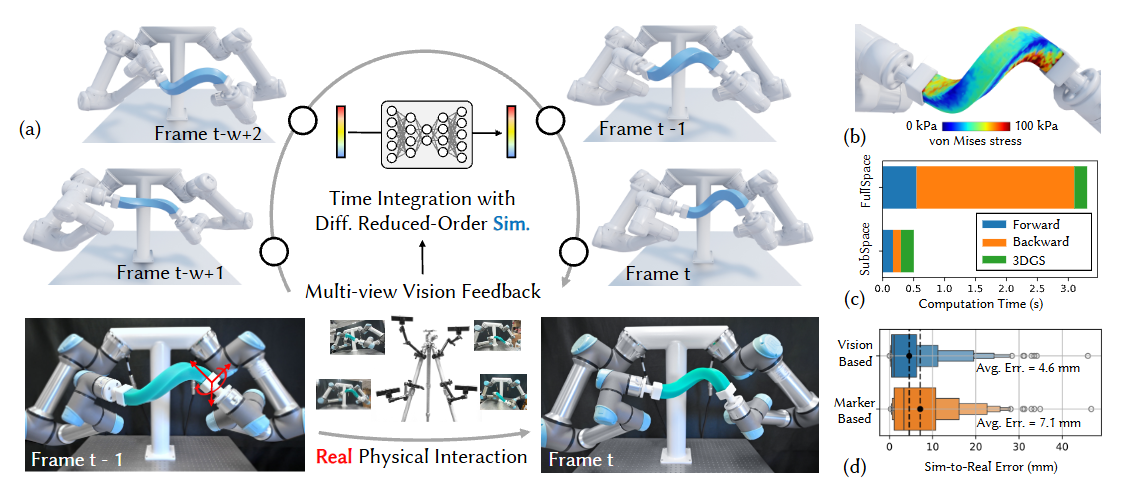
TL;DR Learning deformation functions and confidence maps transfers simulated shape control to real soft robots using point clouds without correspondences or incomplete marker measurements.
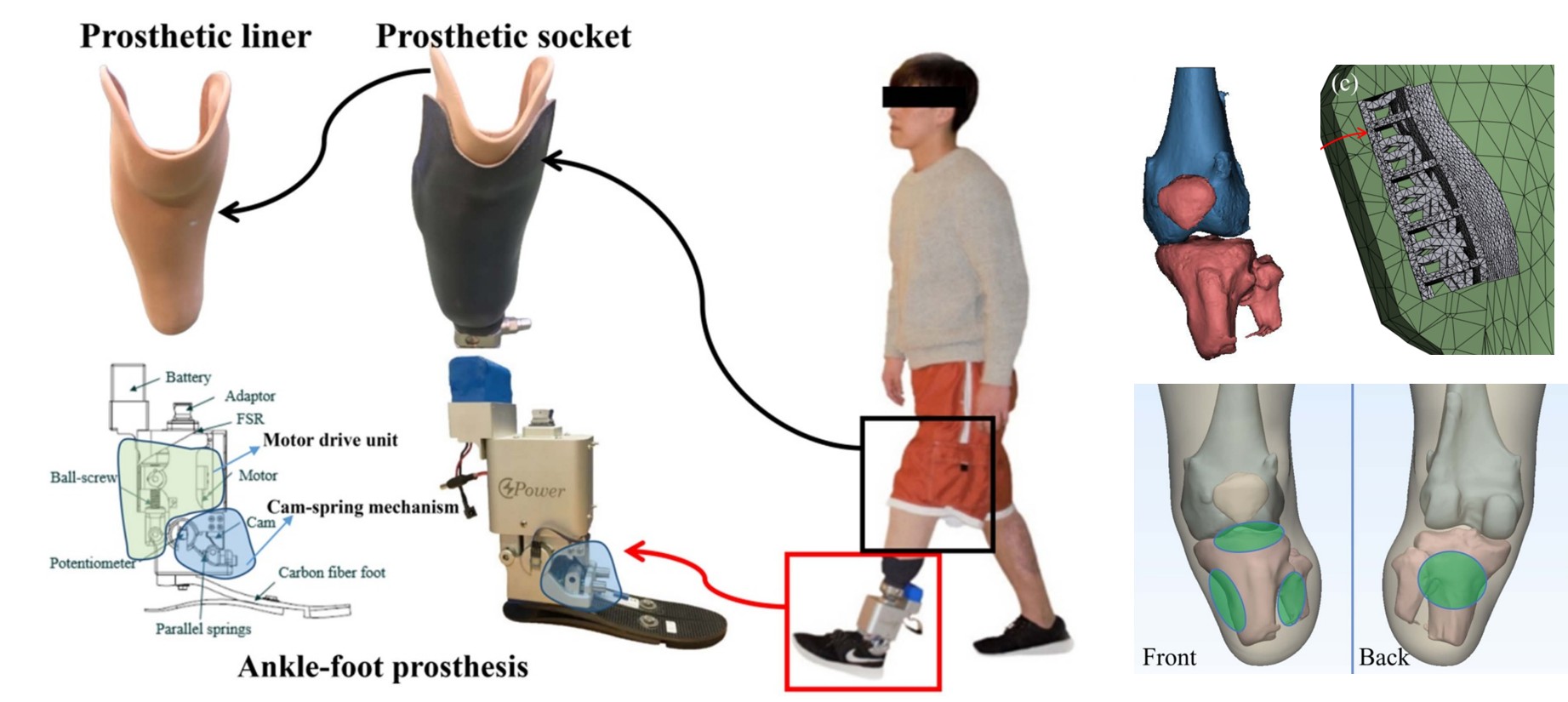
Smart Materials and Structures, 34, 125035, 2025, (Presented at IEEE CBS 2024 Conference).
TL;DR Biomechanical optimization and zero-Poisson-ratio metamaterials tailor a 3D-printed prosthetic socket to redistribute pressure and reduce localized loading on the residual limb.
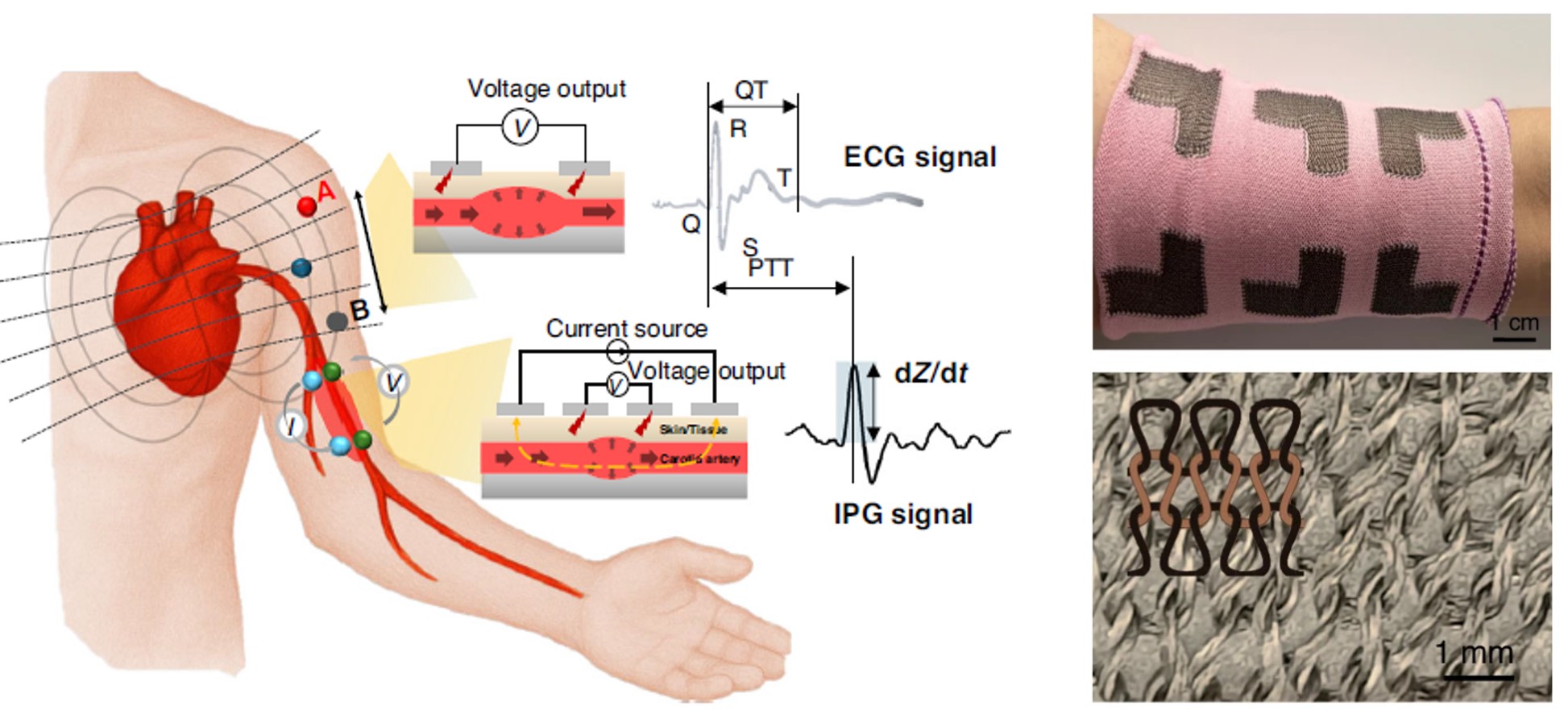
TL;DR A knitted sensing sleeve combines ECG and impedance measurements to monitor cardiovascular signals without precise electrode alignment over an artery.
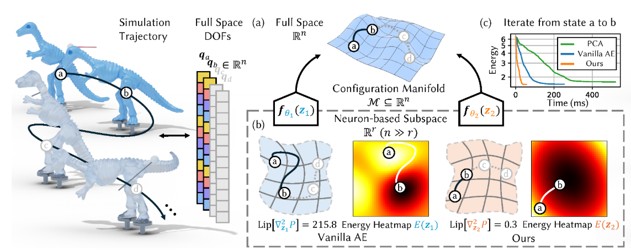
ACM Transactions on Graphics (SIG Asia 2024), vol.44, no.6, December 2024.
TL;DR Lipschitz optimization reshapes learned simulation subspaces so reduced-order solvers converge faster while retaining comparable accuracy for large deformations and contact.
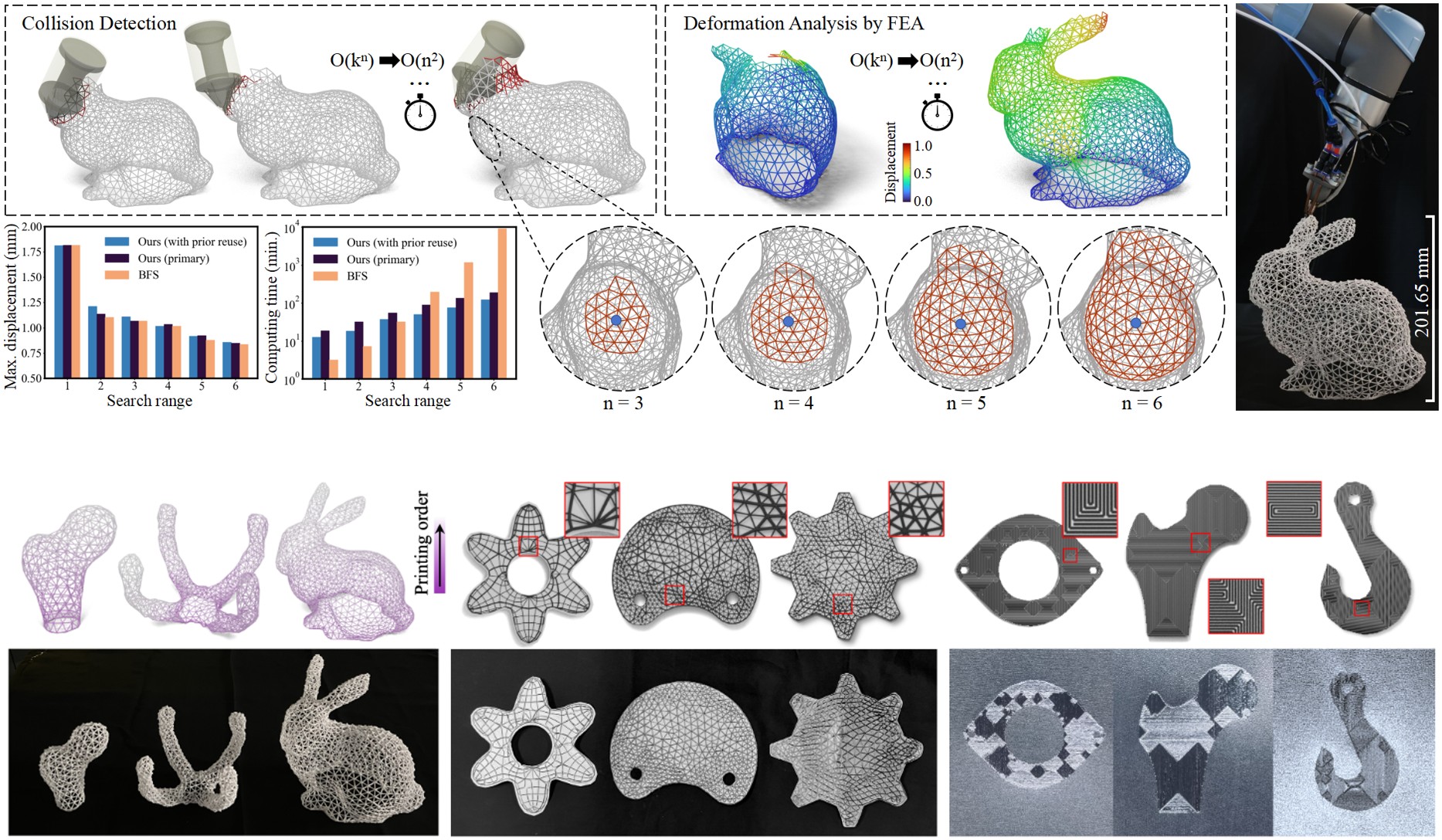
Learning based toolpath planner on diverse graphs for 3D printing
Yuming Huang, Yuhu Guo, Renbo Su, Xingjian Han, Junhao Ding, Tianyu Zhang, Tao Liu, Weiming Wang, Guoxin Fang, Xu Song, Emily Whiting, and Charlie C.L. Wang
ACM Transactions on Graphics (SIGGRAPH Asia 2024), , December 2024.
TL;DR A reinforcement-learning planner builds local graph states on demand to optimize printing paths for wireframes, continuous fibers, and metal parts.
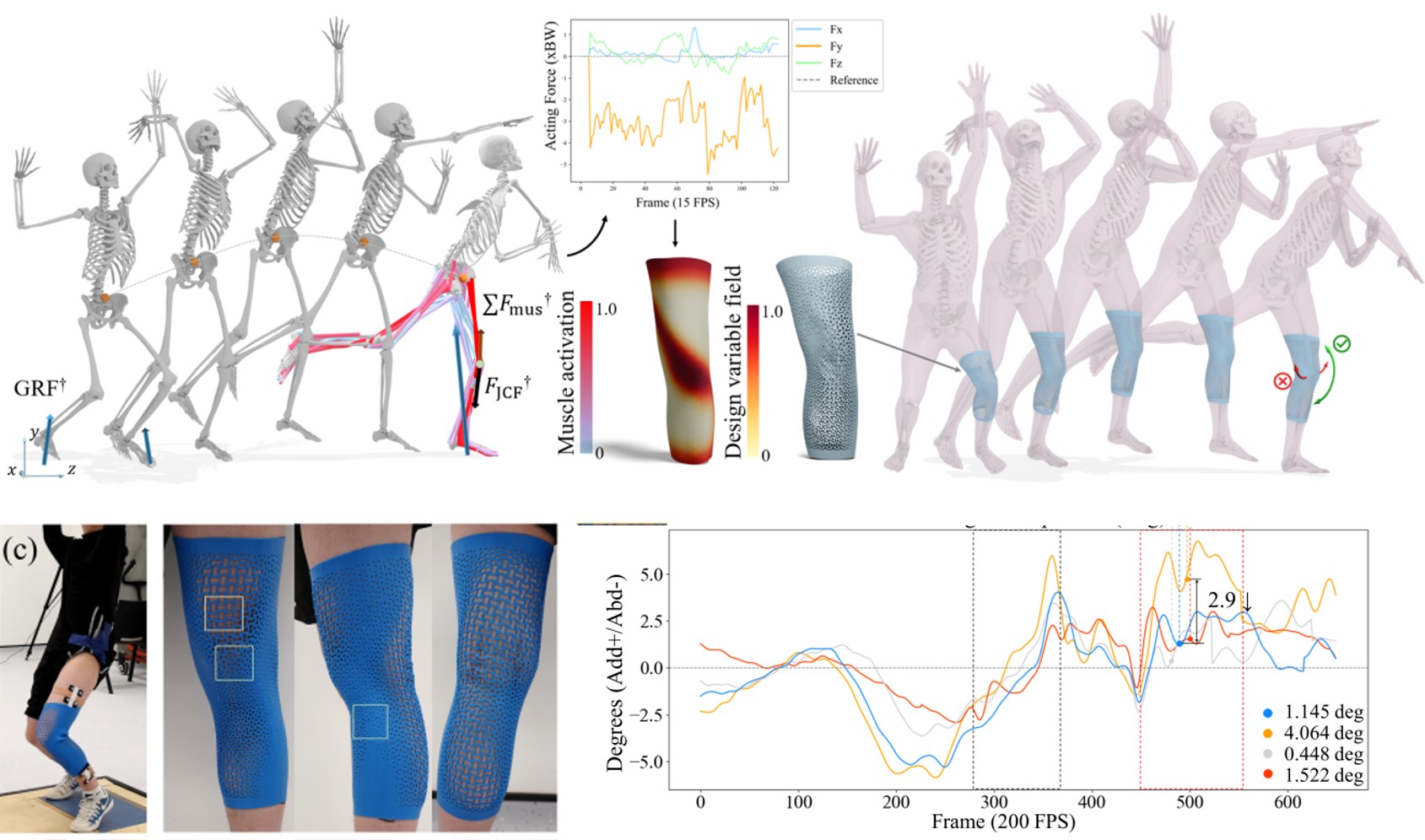
Motion-driven neural optimizer for prophylactic braces made by distributed microstructures
Xingjian Han, Yu Jiang, Weiming Wang, Guoxin Fang, Simeon Gill, Zhiqiang Zhang, Shengfa Wang, Jun Saito, Deepak Kumar, Zhongxuan Luo, Emily Whiting, and Charlie C.L. Wang
ACM SIGGRAPH Asia 2024 Conference, Dec, 2024, Japan.
TL;DR Human motion and biomechanical analysis guide a neural optimizer that distributes brace microstructures to resist potentially harmful knee and ankle movements.
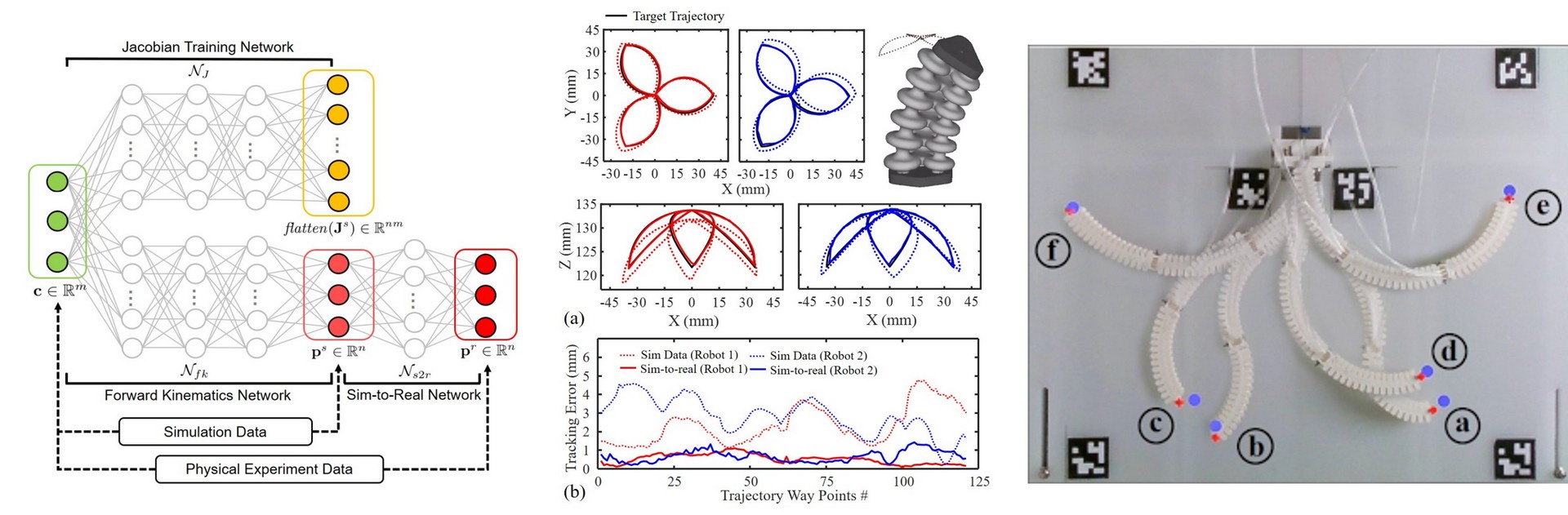
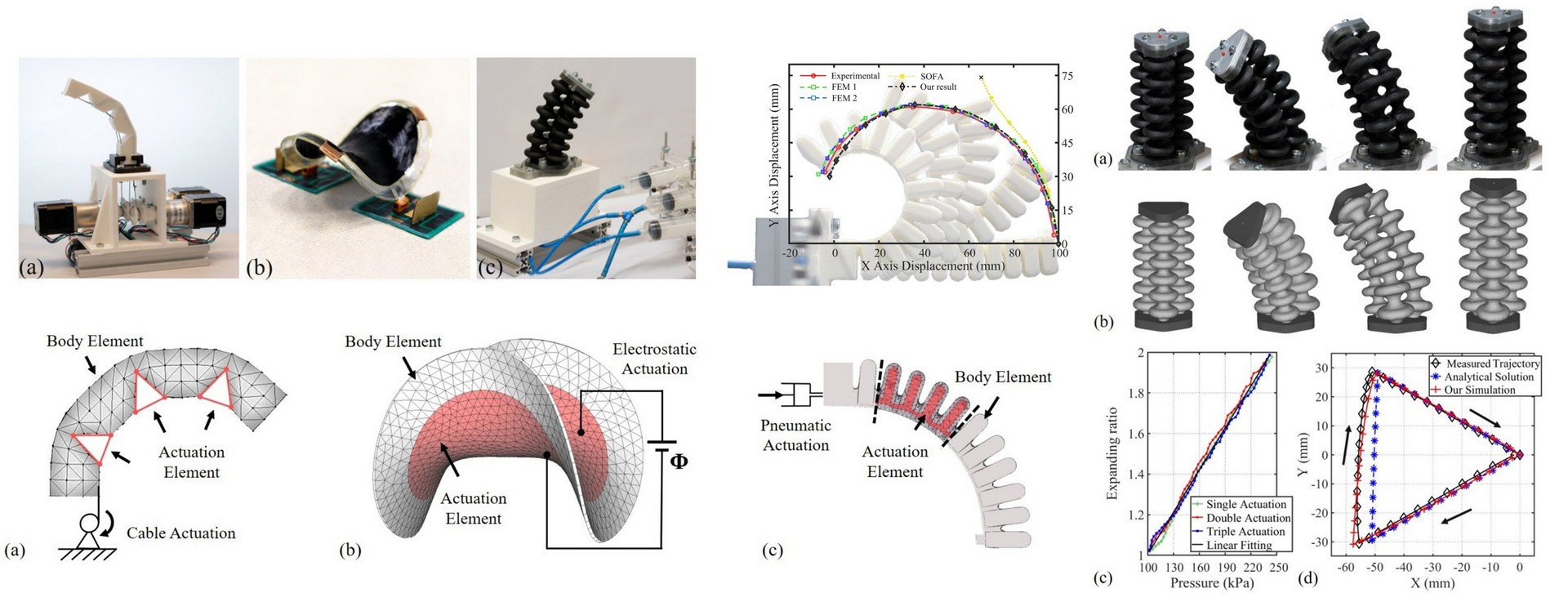
Efficient Jacobian-based inverse kinematics with sim-to-real transfer of soft robots by learning
Guoxin Fang, Yingjun Tian, Zhi-Xin Yang, Jo M.P. Geraedts, and Charlie C.L. Wang*
IEEE/ASME Transactions on Mechatronics, vol.27, no.6, pp.5296-5306, December 2022.
TL;DR Learned kinematics and Jacobians enable efficient soft-robot positioning, while a small set of hardware samples adapts simulation-trained models to the real robot.
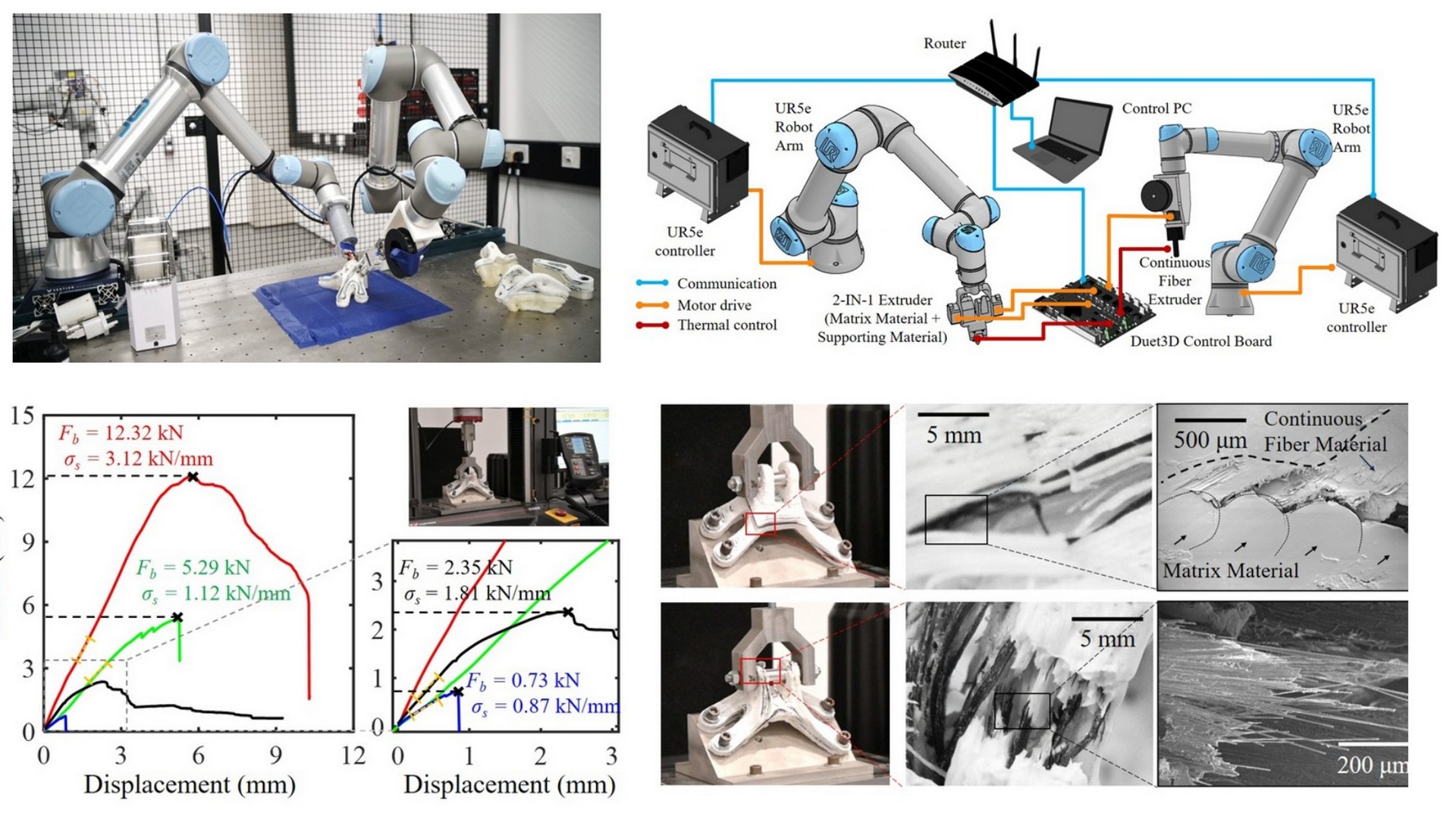
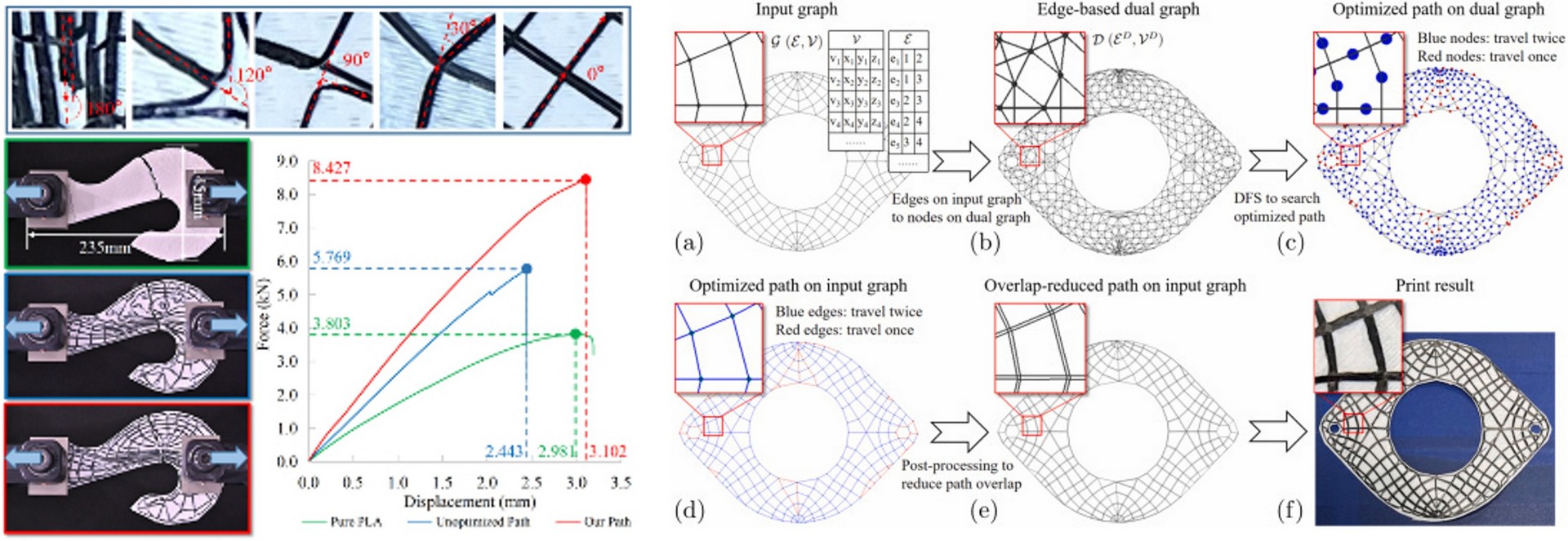
Turning-angle optimized printing path of continuous carbon fiber for cellular structures
Yuming Huang†, Guoxin Fang†, Tianyu Zhang, and Charlie C.L. Wang*
Additive Manufacturing, vol.68, 103501 (16 pages), April 2023.
TL;DR Searching a cellular structure’s dual graph produces continuous fiber paths with fewer sharp turns and overlaps, improving the strength of printed structures.
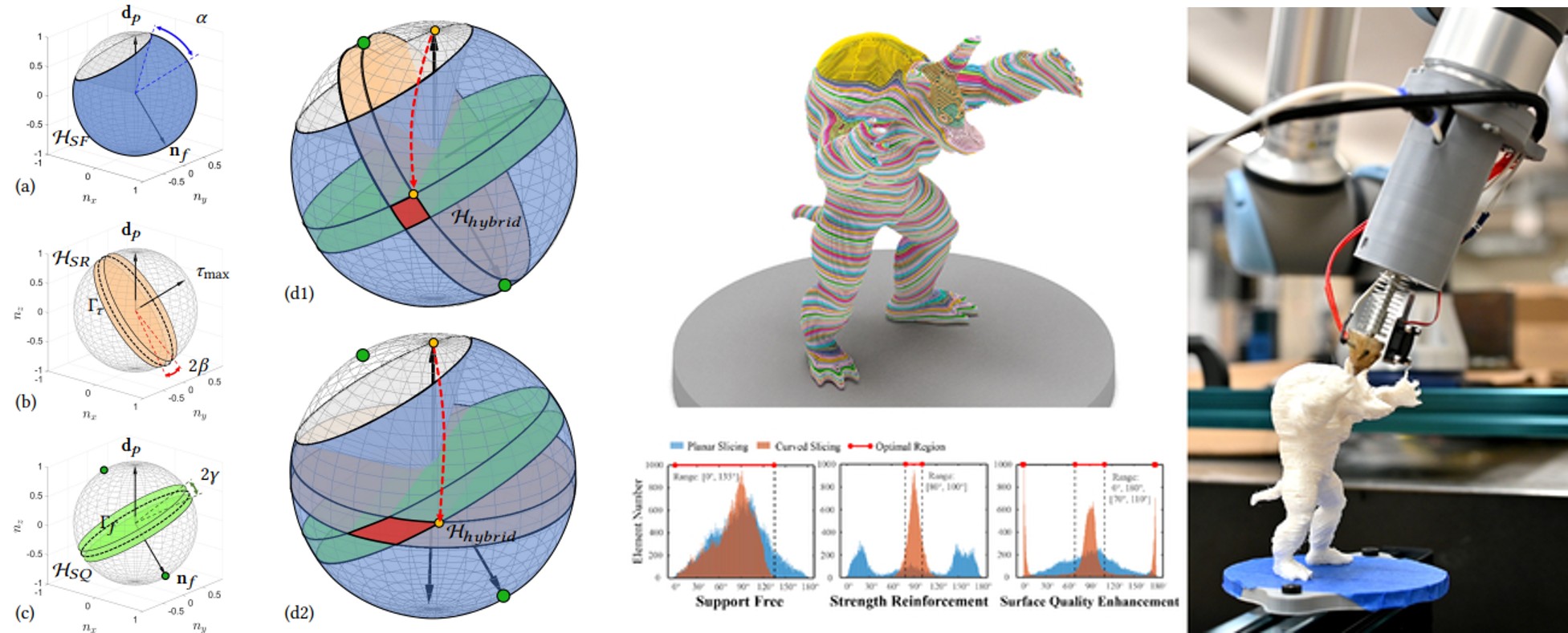
S^3-Slicer: A general slicing framework for multi-axis 3D printing
Tianyu Zhang†, Guoxin Fang†, Yuming Huang, Neelotpal Dutta, Sylvain Lefebvre, Zekai Murat Kilic, and Charlie C.L. Wang*
ACM Transactions on Graphics (SIGGRAPH Asia 2022), vol.41, no.6, article no.277, December 2022. Technical Papers' Best Paper Award 🏆
TL;DR A deformation-based slicing framework balances support reduction, strength, and surface quality when generating curved layers for multi-axis 3D printing.
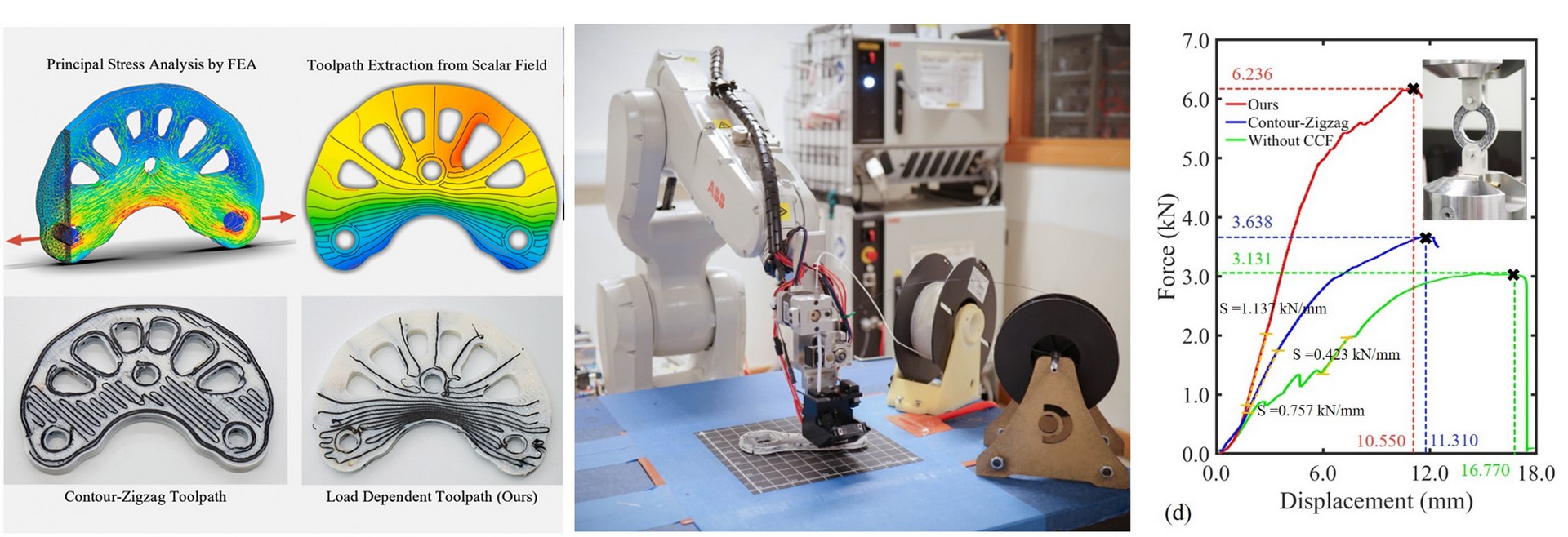
Field-based toolpath generation for 3D printing continuous fibre reinforced thermoplastic composites
Xiangjia Chen†, Guoxin Fang†, Wei-Hsin Liao, and Charlie C.L. Wang*
Additive Manufacturing, vol.49, 102470 (13 pages), January 2022.
TL;DR Stress-guided fields determine the orientation and density of continuous-fiber toolpaths, placing reinforcement where loads demand it rather than using uniform infill.
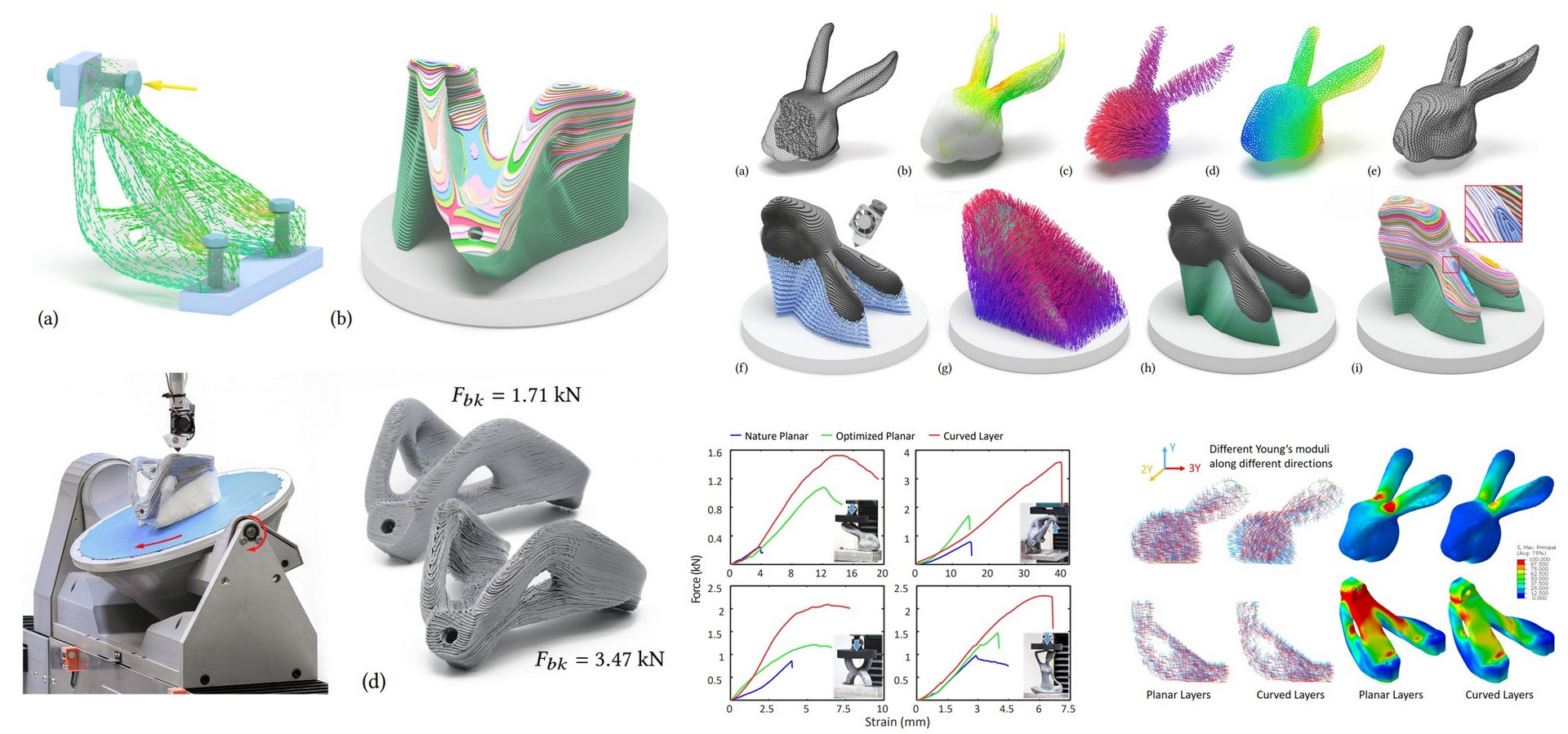
Reinforced FDM: Multi-axis filament alignment with controlled anisotropic strength
Guoxin Fang, Tianyu Zhang, Sikai Zhong, Xiangjia Chen, Zichun Zhong, and Charlie C.L. Wang*
ACM Transactions on Graphics (SIGGRAPH Asia 2020), vol.39, no.6, article no.204 (15 pages), November 2020.
TL;DR Stress-aware curved layers align deposited filaments with load directions, using multi-axis printing to improve strength while accounting for printhead collisions.
Guoxin Fang, Christopher-Denny Matte, Rob B.N. Scharff, Tsz-Ho Kwok*, and Charlie C.L. Wang*
IEEE Transactions on Robotics, vol.36, no.4, pp.1272-1286, August 2020. (extension of IEEE ICRA 2018)
TL;DR A geometric optimization model predicts soft-robot deformation and solves forward and inverse kinematics efficiently under a linear-elastic material assumption.
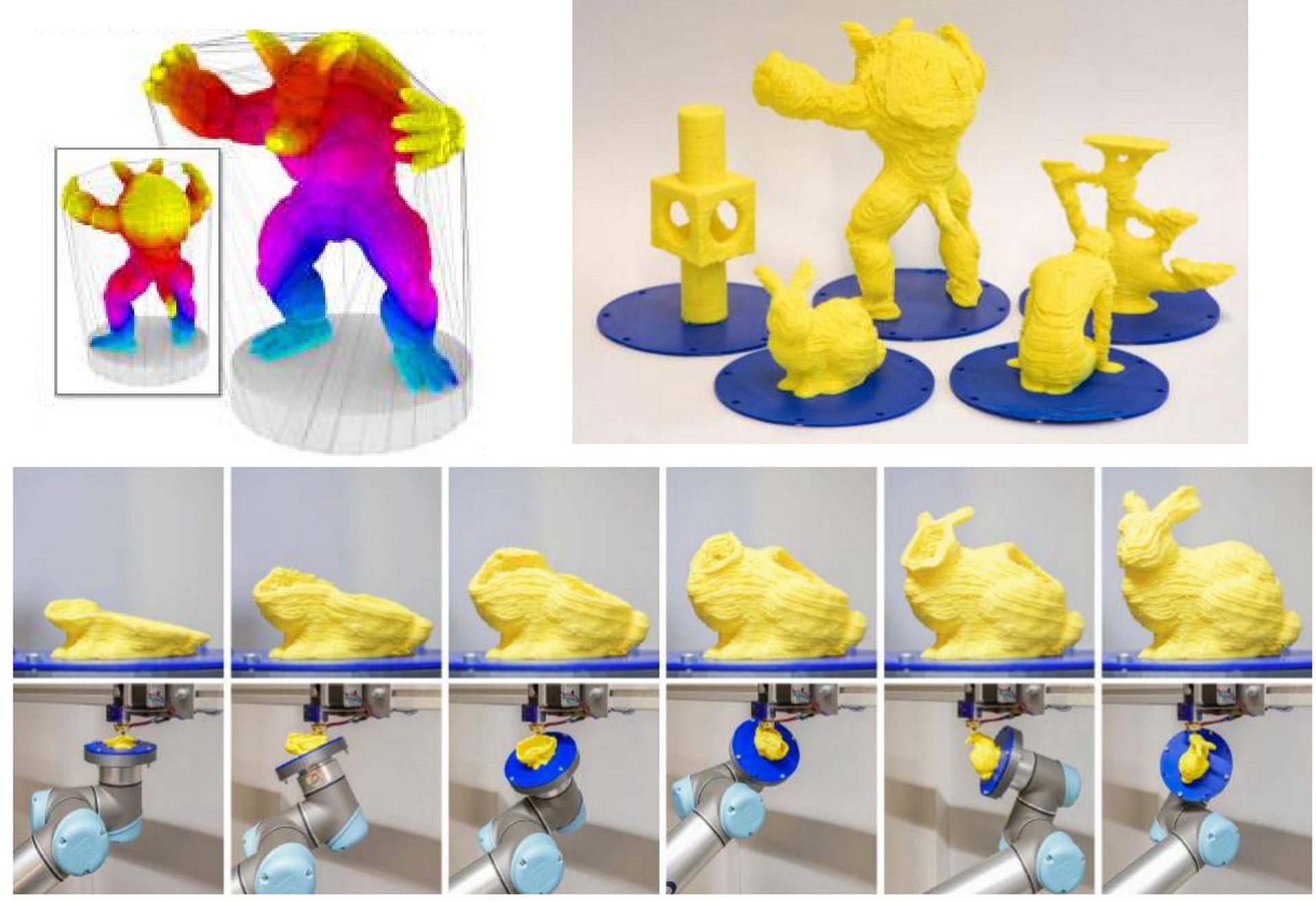
Chengkai Dai, Charlie C.L. Wang*, Chenming Wu, Sylvain Lefebvre, Guoxin Fang, and Yongjin Liu
ACM Transactions on Graphics (SIGGRAPH 2018), vol.37, no.4, article no.134 (13 pages), July 2018.
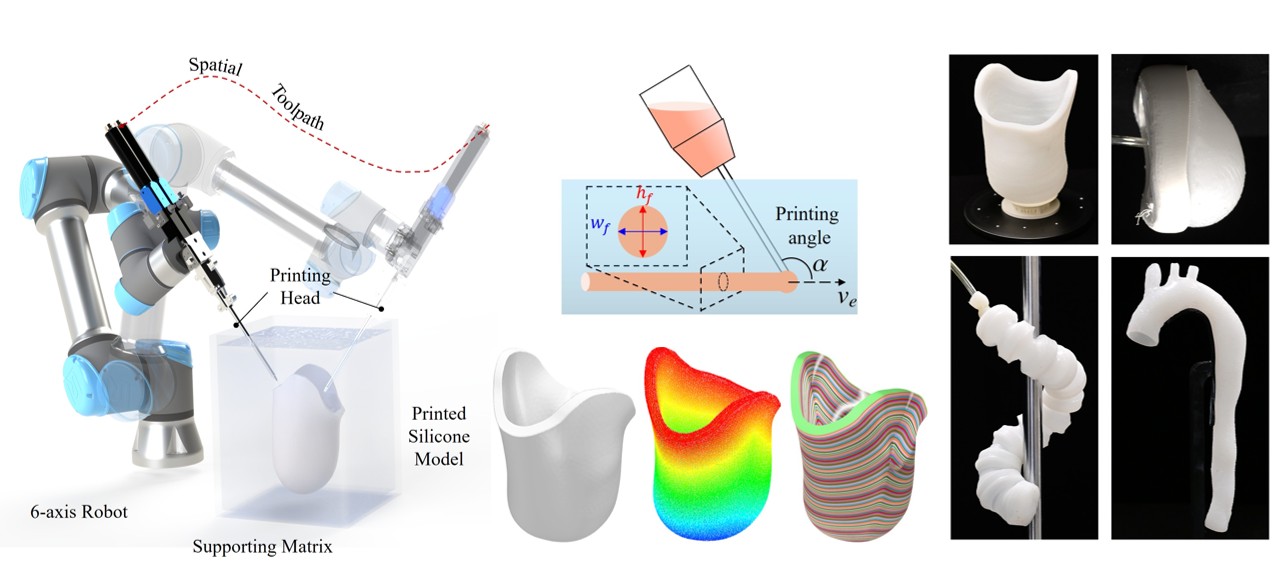
TL;DR Optimized curved layers and robot-compatible toolpaths let a multi-axis printer fabricate complex volumes while greatly reducing the need for support structures.
CRML members, including alumni, are shown in bold. † Equal contribution. * Corresponding author. Earlier work includes research conducted before the lab was established at CUHK.